
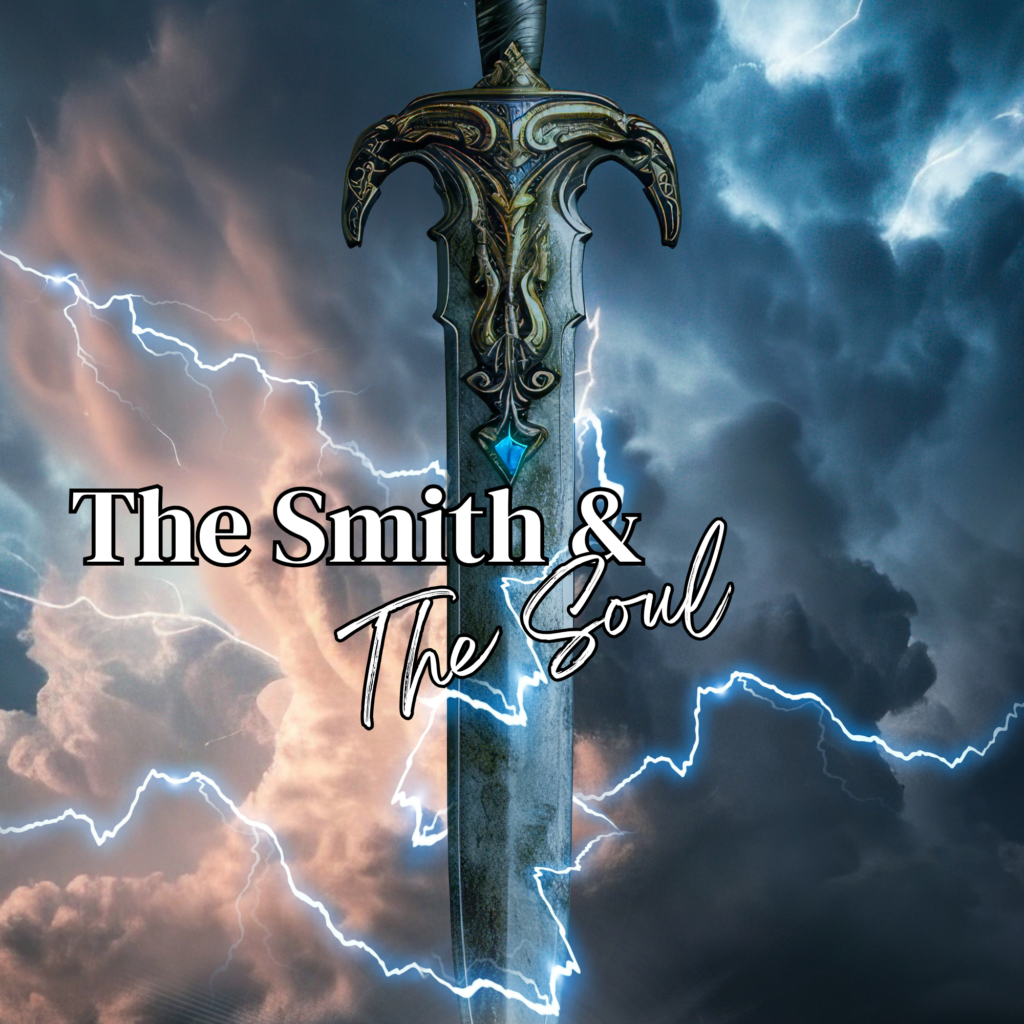
The Metaphysics of Celestial Steel
In many legends of high fantasy and ancient lore, a hero’s weapon is rarely just a tool. It is often a companion with a temperament, a history, and occasionally, a will of its own. This concept of the sentient blade is rooted in the deep history of metallurgy, where the forge was seen as a site of transmutation and not just of metal, but of spirit too.
Alchemy of the Forge
As Mircea Eliade discusses in The Forge and the Crucible (1956), ancient smithing was inextricably linked to alchemy. The smith was seen as a figure who accelerated the work of Nature. In this worldview, ores were thought to grow in the belly of the earth, and the smith, by extracting and refining them with fire, was performing a sacred, almost divine act.
The forge was a place of ritual. The quenching of a blade, that moment when hot steel plunges into liquid, often included prayers or sacrifices. It was believed that the elements used to cool the metal (water, oil, or in darker legends, blood) imparted specific mana or spiritual qualities to the steel.
Ensoulment: Norse and Japanese Traditions
In Norse mythology, the greatest weapons were forged by the Duergar (dwarves) beneath the earth. Blades like Gram or Mjölnir were not just powerful; they carried the essence of the supernatural beings who made them. As Richard F. Burton notes in The Book of the Sword (1884), the Norse viewed the sword as a living thing, often naming it as one would a child or a comrade.
Similarly, the Japanese tradition of the Katana elevated the smith to a priest-like status. The process of smithing a sword was considered a spiritual act and involved rituals and prayers. The Shinto believed the sword was a sacred dwelling for the spirits.
Celestial Steel and the Fantasy Connection
In the context of fantasy fiction, the concept of Ensoulment creates a fascinating dynamic. If a weapon possesses its own spirit, the relationship between the wielder and the blade becomes a partnership, or a struggle for dominance.
For beings like angels and demons, a weapon made of Celestial Steel might be more than a physical object; it could be a manifestation of their own power or a tether to their home realm. When such a weapon is handled by a human, the friction between the soul of the blade and the spirit of the wielder becomes a source of intense tension.
Research & Further Reading
- Burton, R. F. (1884). The Book of the Sword.
- Eliade, M. (1956). The Forge and the Crucible.
- TOZANDO Katana Shop: Katana, Shogun, and Culture: Understanding Japanese Sword Popularity.
Want to step deeper into the shadows?
My books always begin with a single spark of history or a forgotten piece of lore, but the most personal parts of that journey never make it into the final manuscript.
If you want to go beyond the pages, I invite you to join my newsletter. Subscribers get my exclusive Behind the Veil notes—a personal look at the research, the late-night inspirations, and the secrets from my desk that shape the worlds I build.