
The High-Society Occult Underground
The Victorian and Edwardian eras are often characterized by their industrial progress and rigid social etiquette. Yet, beneath the veneer of polished mahogany and gaslit parlours lay a profound obsession with the supernatural. This was the age of the Occult Revival, a period where the scientific mind began to flirt dangerously with the ancient grimoire.
The Enchantment of the Modern
As Alex Owen explores in The Place of Enchantment (2004), the late 19th-century occult movement was not a retreat into the past, but a sophisticated part of the modern. Societies like the Hermetic Order of the Golden Dawn were not composed of outcasts, but of doctors, writers, and aristocrats.
These practitioners blended high-society manners with complex ritual magic. They believed that through rigorous study, like the academic discipline found in elite institutions, one could transcend the mundane world and commune with higher (or lower) spiritual entities. This creates a fascinating duality: the practitioner who is a refined socialite by day and a seeker of forbidden celestial secrets by night.
The Séance and the Spectacle
While the Hermetic Order of the Golden Dawn focused on High Magic and the study of the Qabalah and Enochian tablets, the broader public was captivated by Spiritualism. The séance became a staple of the occult underground, where participants gathered in darkened rooms to summon spirits through table-turning and automatic writing.
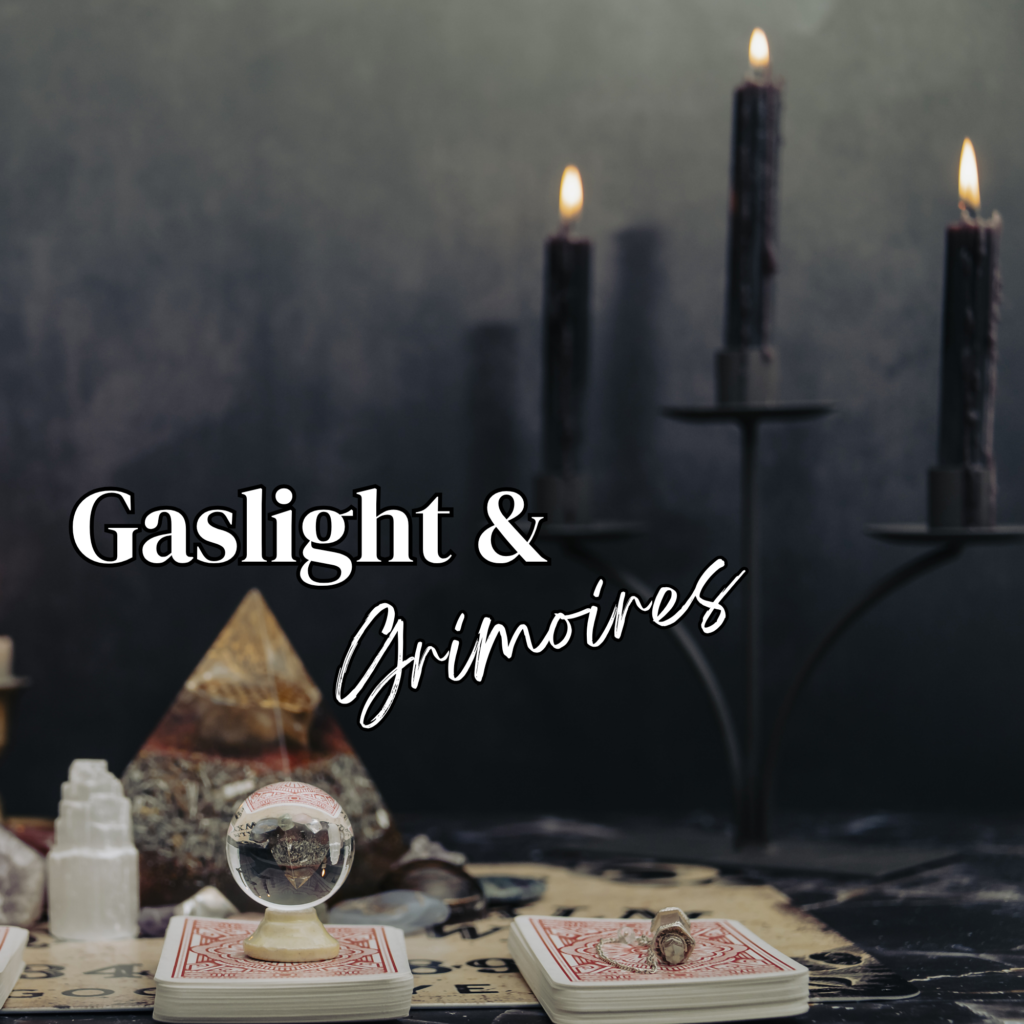
This era popularized the aesthetic of the occult study. These were rooms filled with heavy velvet drapes to block out the gaslight, silver-edged mirrors for scrying, and leather-bound grimoires that promised to bridge the gap between the living and the dead. It was a time when the supernatural was treated as a hidden science, waiting to be unlocked by those with the right lineage or the right key.
The Allure of the Secret Society
The true power of the 19th-century occult underground lay in its exclusivity. To belong to an order was to be part of a secret human experience. Members moved through grades or degrees, gaining access to increasingly potent knowledge.
This historical reality provides a rich backdrop. The tension isn’t just in the magic itself, but in the politics of the secret: who is allowed to know the truth, and what happens when that truth is sought by someone outside the inner circle?
Research & Further Reading
- Owen, A. (2004). The Place of Enchantment: British Occultism and the Culture of the Modern. (University of Chicago Press).
- White, Ethan Doyle. “Hermetic Order of the Golden Dawn”. Encyclopedia Britannica, 24 Apr. 2026, https://www.britannica.com/topic/Hermetic-Order-of-the-Golden-Dawn.
- Charlotte Hopkins. “Spiritualism and the Victorian City” 4 Oct. 2024, The London Archives https://www.thelondonarchives.org/blog/spiritualism-and-the-victorian-city.