
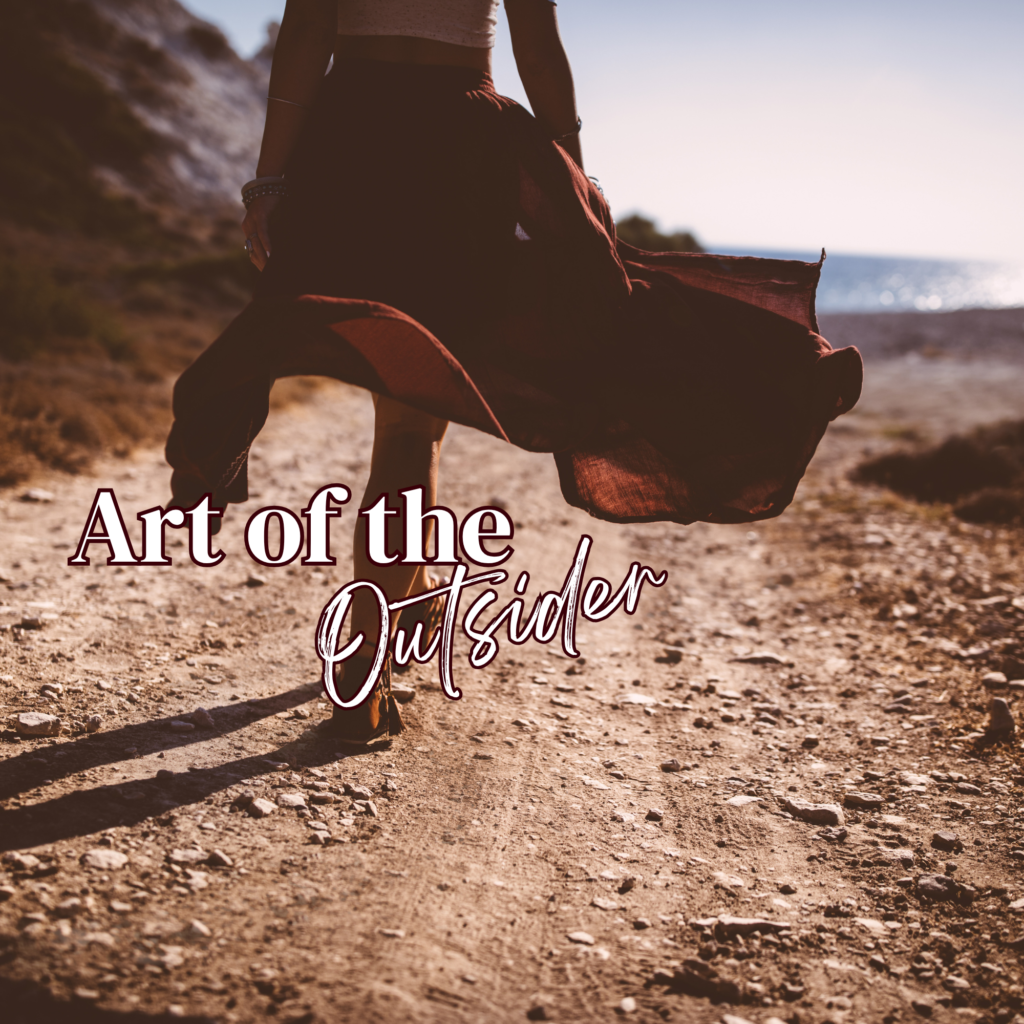
In the rigid hierarchy of an institution like Sablegate Academy, the choice to wear flowy, hand-embellished garments isn’t just a fashion preference, it is a lineage of artistic defiance. Nina Guevera’s Edgy Bohemian style finds its roots in a 19th-century revolution that sought to prioritise the handmade over the mass-produced.
The Original Bohemians: The Romantic Rebellion
The term Bohemian first emerged in 1830s Paris to describe a subculture of artists, poets, and wanderers who lived in the Latin Quarter. They were the original counterculture, rejecting the bourgeois obsession with status and industry. These individuals were often associated with the Romantics, who valued emotion, nature, and the Sublime over cold logic.
For a protagonist like Nina, the Bohemian influence is seen in her choice of layered, comfortable pieces and earthy tones. Historically, Bohemians wore older, worn-in clothes that prioritised the life of the mind and the hand over social standing. Her oversized knit sweaters and flowy maxi skirts are modern echoes of the robe de chambre and loose tunics worn by artists who refused to be corseted by the expectations of the elite, much like Nina refusing to be defined by the rigid categories of
the Academy.
The Aesthetic Movement: The Cult of Beauty
Following the early Bohemians, the Aesthetic Movement (led by figures like Oscar Wilde and the Pre-Raphaelites) took this rebellion further. They advocated for Artistic Dress, which favoured loose, flowing lines and honest materials like wool and silk.
These artists believed that clothing should be a personal canvas. This was the birth of the Artistic Individual—someone whose clothes showed they were a creator, not just a consumer. This aligns perfectly with Nina’s Adventurer profile; her clothing is a tactile expression of her internal creative world.
The Combat Boot and the Canvas: The Modern Utility
The Edgy and Utility side of Nina’s style—the combat boots and cargo accents—represents the modern evolution of this defiance. In the mid-20th century, subcultures began repurposing workwear to signify a grounded, active reality.
Pairing a delicate, flowy skirt with rugged boots creates a visual Duality: the vulnerability of the Bohemian artist protected by the armour of the wanderer. This utility isn’t just a look; it’s a toolkit for a character whose hobby is exploration.
The Power of the Hand-Painted (DIY)
The most authentic aspect of Nina’s look is her DIY elements. Historically, hand-painting clothing and adding custom patches was a way for marginalised artistic groups to communicate secret symbols or shared values. By painting her own symbols or crafting her own patches, Nina is reclaiming her narrative, turning her attire into a layer of curated armour that keeps her true intentions hidden in plain sight.
Research & Further Reading
- Bohemian New York: How the 1830s Parisian subculture influenced the world and changed our view of the starving artist. The Vault at Pfaff’s (Lehigh University).
- An introduction to the Aesthetic Movement: A Movement aimed to escape the ugliness and materialism of the Industrial Age. Victoria and Albert Museum.
- The Aesthetic Movement (The Metropolitan Museum of Art): Exploring the movement dedicated to Beauty and the rejection of industrial fashion. The Met.
- Pre-Raphaelite women – fashion inspirations: How 19th-century artists used flowy fabrics and muted colours to signify truth. National Museums Liverpool.
- Unravelling the History of Punk Rock Patches: The Bold Legacy of Rebellion in Fashion. PatchMakersUSA.
Want to step deeper into the shadows?
My books often begin with a single spark of history or a forgotten piece of lore, but the most personal parts of that journey never make it into the final manuscript.
If you want to go beyond the pages, I invite you to join my newsletter. Subscribers get my exclusive Behind the Veil notes—a personal look at the research, the late-night inspirations, and the secrets from my desk that shape the worlds I build.